
Three Years On, the Mission X Is Still a Concept — and Porsche Just Ruled Out a BEV Above the 911
The 2023 study promised four motors, 900 volts and a 1:1 power-to-weight ratio. In October, Porsche's chairman said there's no demand for a battery-electric car on the new supercar platform.
- Model
- Porsche Mission X (concept)
- Status
- Design study, never confirmed for production
- Revealed
- 8 June 2023, Porsche Museum, Zuffenhausen
- Occasion
- '75 Years of Porsche Sports Cars' exhibition
- Powertrain
- Four electric motors
- Architecture
- 900-volt, battery mounted behind the seats
- Power-to-weight target
- 1
- Stated ambition
- Record holder for road-legal cars on the Nürburgring Nordschleife
- Length
- 4,500 mm (177.2 in)
- Width
- 1,999 mm (78.7 in)
- Height
- 1,200 mm (47.2 in)
- Wheelbase
- 2,730 mm (107.5 in)
- Doors
- Scissor
- Price / on-sale date
- Never announced
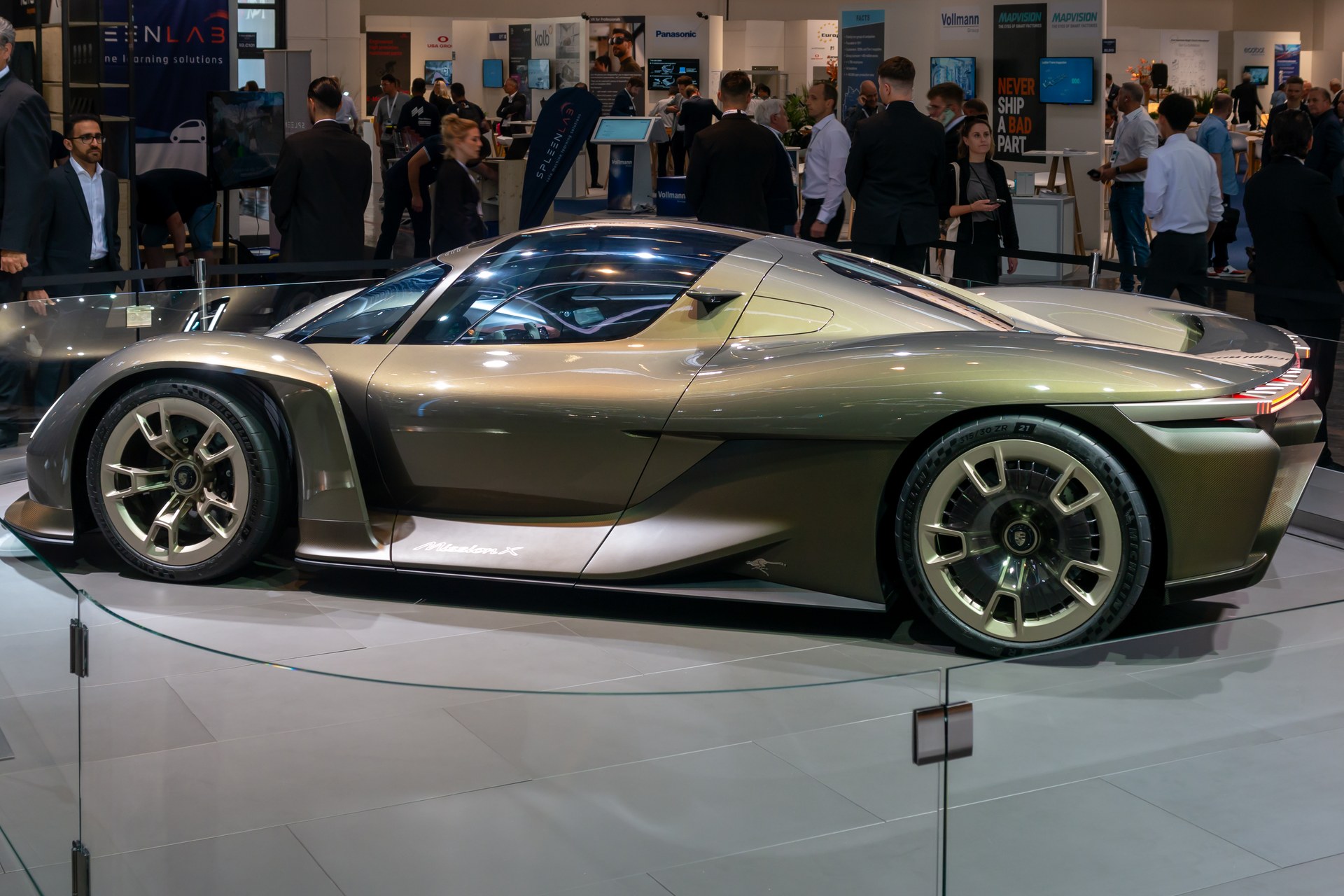
When Porsche rolled the Mission X into the museum courtyard at Zuffenhausen on 8 June 2023, during the exhibition marking 75 years of Porsche sports cars, it looked like the beginning of something. The study had four electric motors, a 900-volt architecture with the battery sitting behind the seats, scissor doors, and a stated target of a 1:1 power-to-weight ratio. Porsche said out loud that it wanted the thing to be the fastest road-legal car around the Nürburgring Nordschleife. The dimensions were real and specific — 4,500 mm long, 1,999 mm wide, 1,200 mm tall, on a 2,730 mm wheelbase.
"There won't be a BEV on that platform: there is no demand." — Michael Leiters on the Mission S platform, to Auto Express
Three and a half years later, it is still a concept. There has never been a price, never an on-sale date, never a production confirmation.
The closest it came was early 2024, when then-CEO Oliver Blume told Car Sales that customer feedback on the Mission X had been "massively positive" and that the reaction was "great motivation" to push toward production, with a decision expected that year. Even then the caveat was doing a lot of work: the project still had to be judged feasible before it could be approved, and Porsche said a market launch would not happen before 2025. That date has come and gone.
What changed this month is not a cancellation — Porsche has not cancelled the Mission X, and it is worth being precise about that. What changed is that Porsche finally said what it is building instead, and the answer runs in the opposite direction.
On 15 October, on a pier in Queens, Porsche revealed the Mission S: a vision model previewing a mid-engined super sports car platform positioned above the 911, which the company describes as a permanent and versatile addition to the range rather than a one-off hypercar. Michael Leiters, chairman of the executive board, told Auto Express how that platform will be powered. "With Mission S we will listen to the customer," he said. "We have the flexibility in that platform to do pure ICE, hybrid and also plug-in hybrid. There won't be a BEV on that platform: there is no demand."
Read that carefully, because it is narrower than the headlines suggest. Leiters ruled out a battery-electric version of the Mission S platform. He did not rule out the Mission X, which was never on that platform — it had its own 900-volt architecture and its own packaging, with the battery behind the occupants rather than an engine. Formally, the electric hypercar study remains exactly what it has always been: unconfirmed.
Practically, though, the signal is hard to miss. Porsche has now committed engineering money and a public product line to a combustion-and-hybrid mid-engined car above the 911, and its chairman has gone on record saying the demand for an electric car in that part of the market is not there. A manufacturer that believed an electric hypercar was imminent does not usually frame its flagship platform that way.
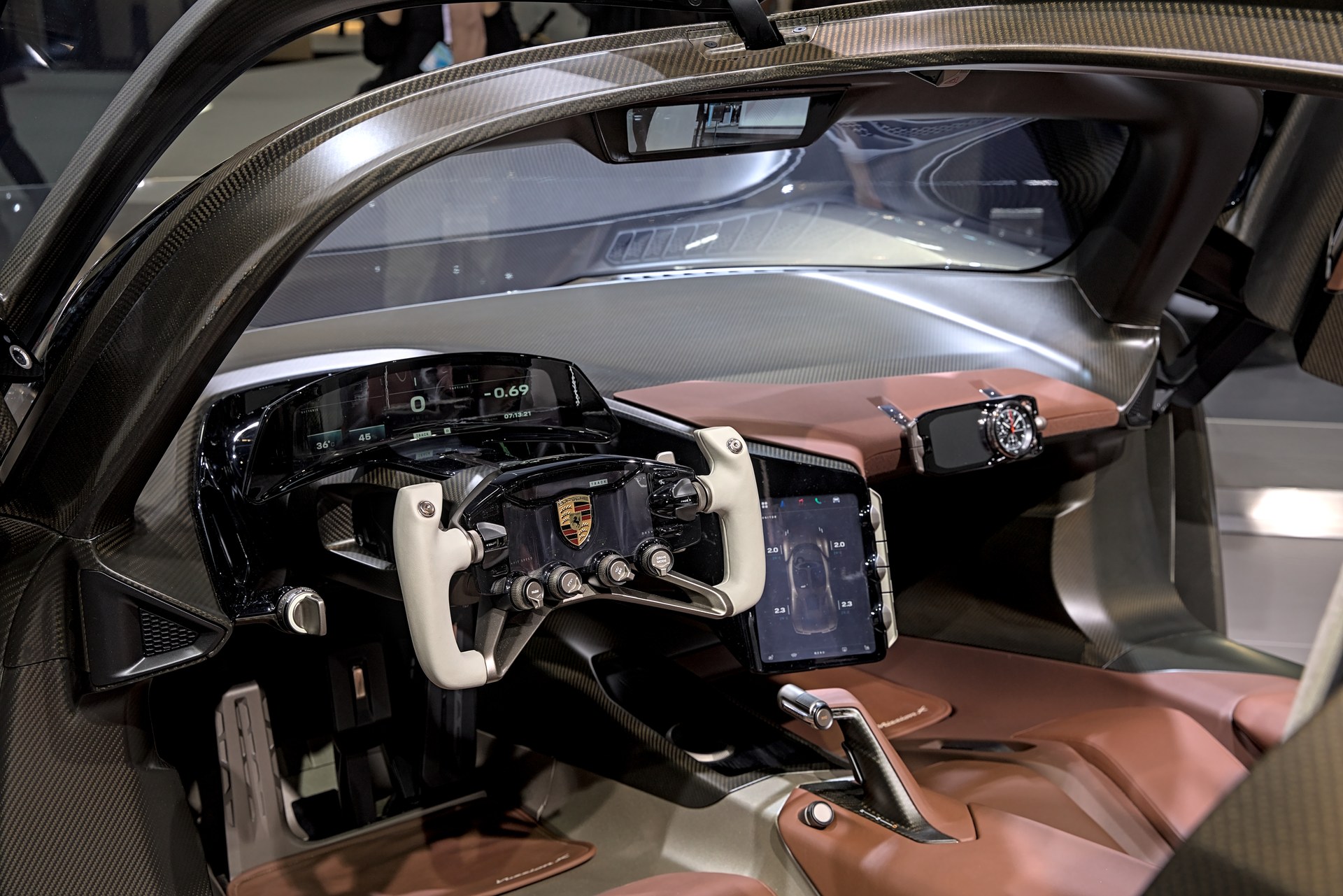
The two cars make a useful before-and-after if you put the interiors side by side. The Mission X cockpit was a 2023 statement of intent — screens, graphics, a driver-focused digital environment. The Mission S went the other way: five round instruments, an analogue needle on the rev counter, and no permanently fitted centre display at all, with a retractable phone holder in its place. In three years Porsche's idea of what belongs in front of a driver inverted.
None of this means the Mission X was wasted. Concepts exist to test a reaction, and Porsche got one. But the useful thing to take from October is that when Porsche finally put a number of its own on where the money is going above the 911, the answer involved an engine. The electric hypercar is still a show car in a museum, and for now it has no platform underneath it.
Three Videos and a Complaint: NHTSA Opens a School-Zone File on Tesla's Robotaxis
The federal evidence pile is four incidents, no crashes and no injuries. The question underneath it is bigger than that: whether an automated driving system reliably knows when a school zone is switched on.
Ford Recalls 2,276 F-150s Because a Repair Was Logged as Finished and Wasn't
The defect is the bolts that hold the front seats to the floor. The chronology is the part worth reading: an operator ran out of cycle time, the line stopped exactly as the protocol says it should, and then somebody ticked the repair off in the tracking system before it had been made.
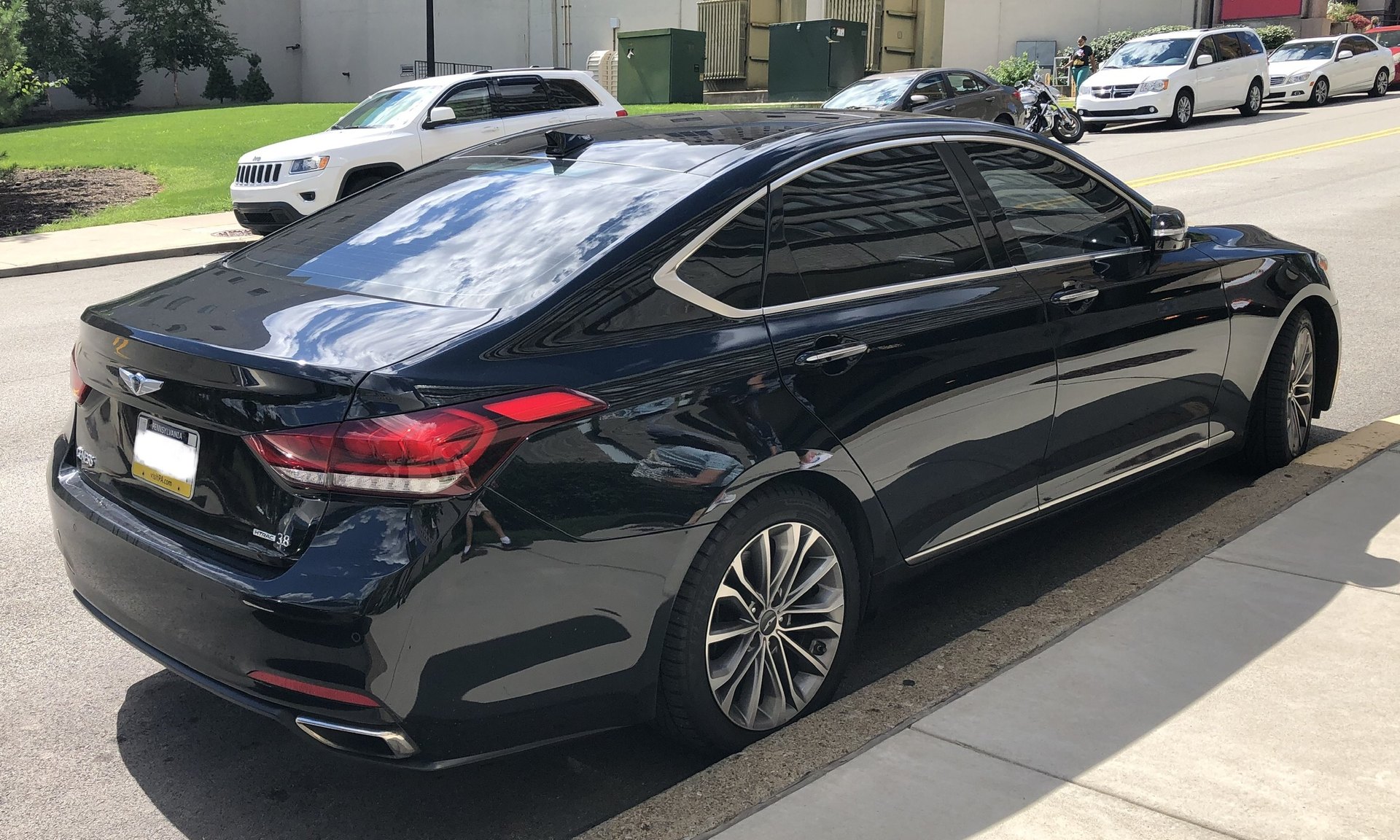
Hyundai Recalls 94,622 Genesis Sedans Over a Seat Switch That Can Get Stuck On
A knock to the power seat switch can leave the adjustment motor running after everyone has got out of the car. Hyundai first heard about it on the last day of 2021. The recall was filed on 8 October 2026, and the fix has not been designed yet.