
Market Find: An AAR Eagle Mk I With a Gurney-Weslake V-12 — Chassis 103, and the Race It Didn't Win
RM Sotheby's has the third of four Eagle Formula 1 cars in its Sealed September sale at a $7–9 million estimate. It is not the car that won at Spa. Understanding why that matters is most of the story.
There is a 1967 AAR Eagle Mk I in RM Sotheby's Sealed September sale, chassis 103, one of four Formula 1 cars Dan Gurney's All American Racers ever built. Bidding on the sealed platform opens Wednesday, 23 September and closes Wednesday, 30 September at 12:15 p.m. Pacific. The estimate is $7 million to $9 million. The car is in Culver City, California, and it sells on a bill of sale, the way most cars that have never worn a licence plate do.
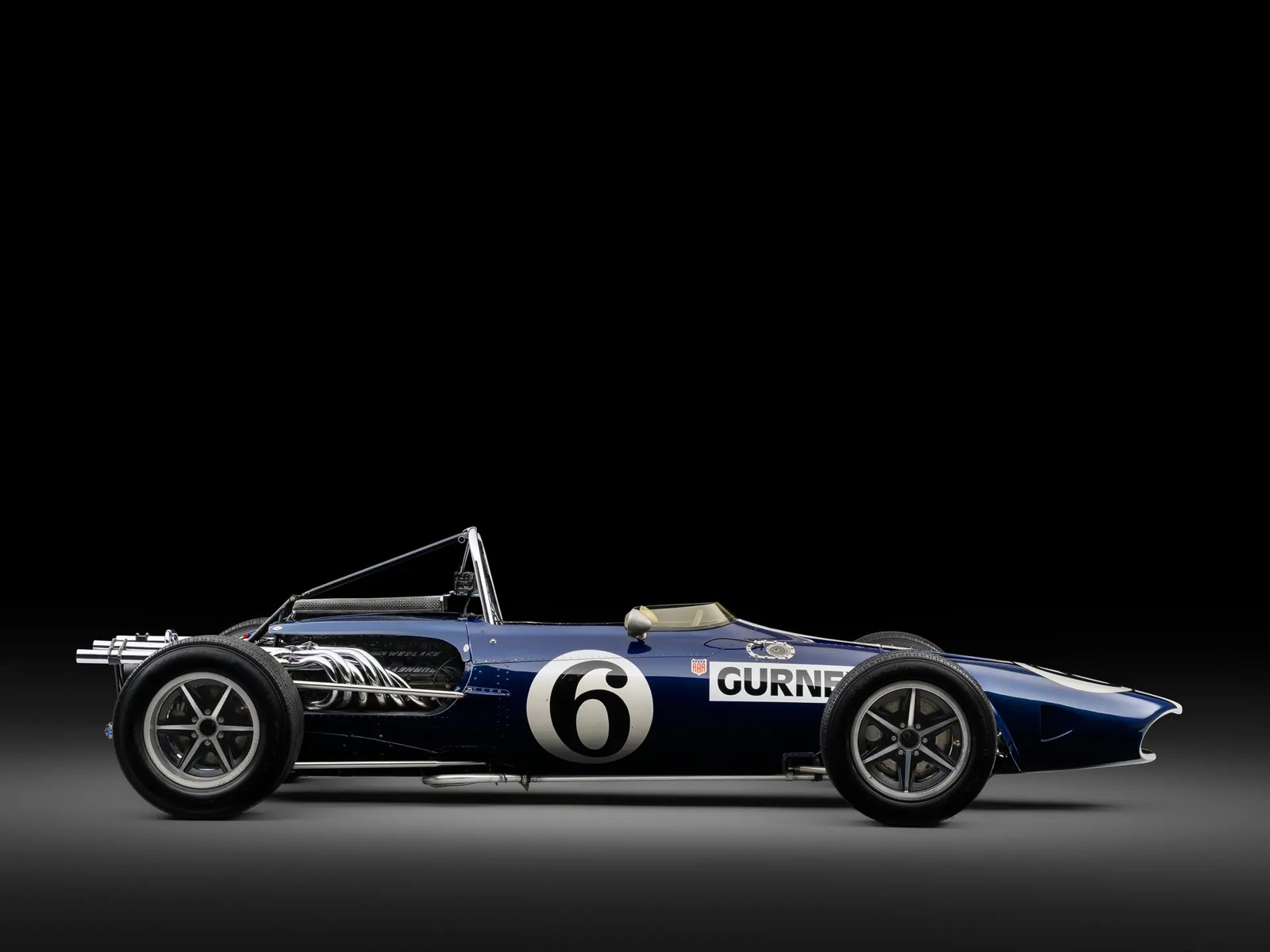
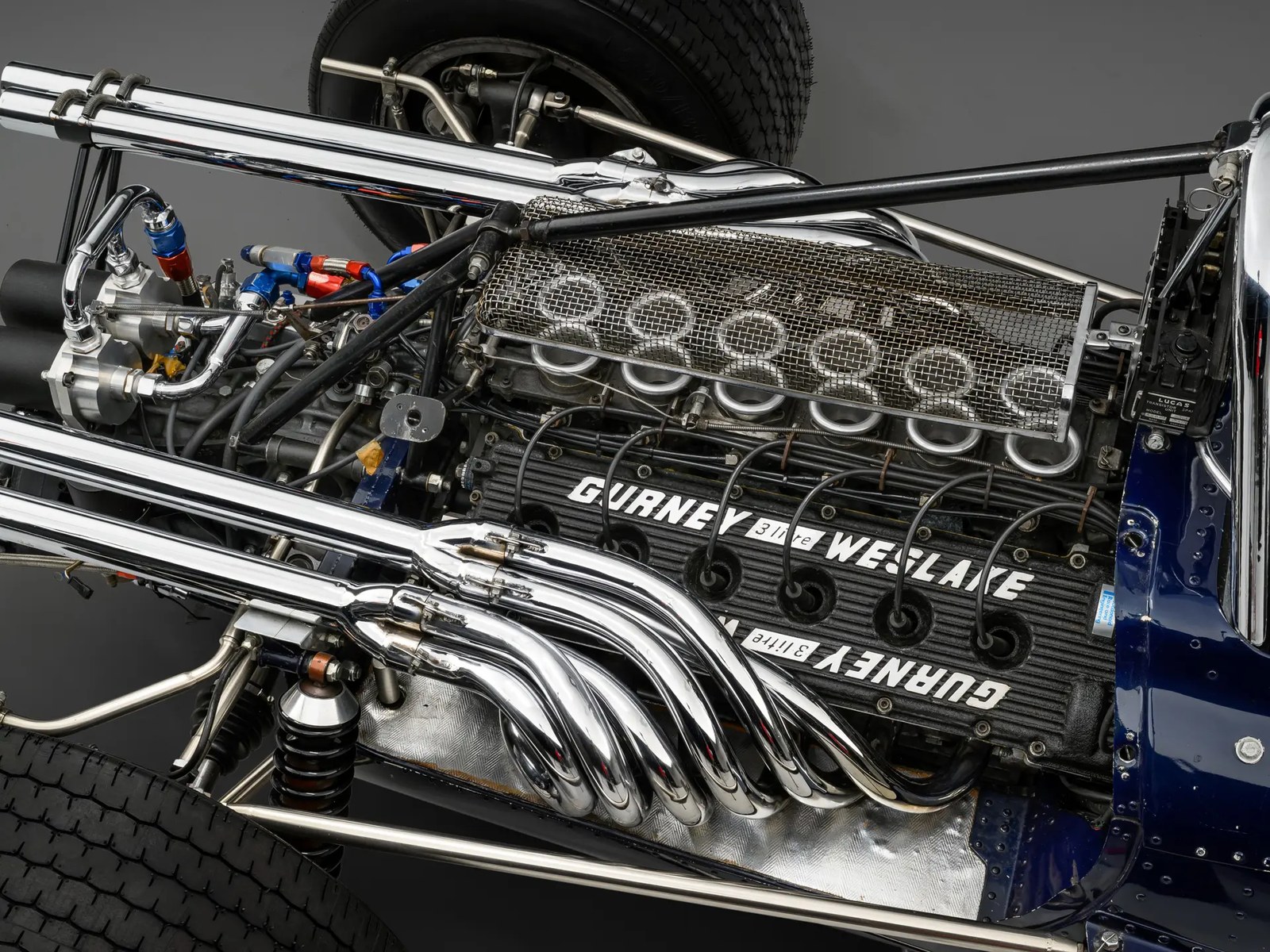
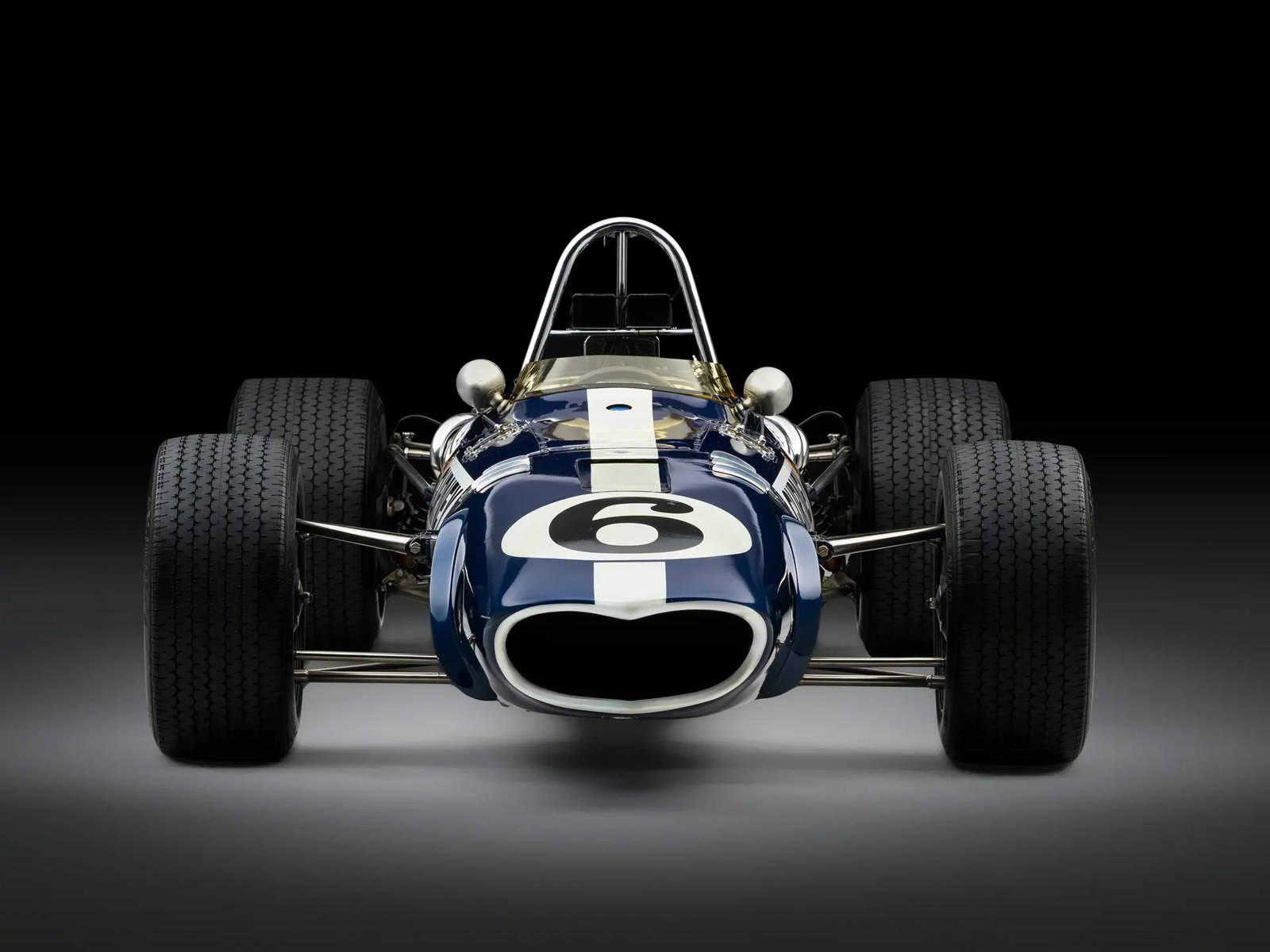
The Eagle is one of the small handful of racing cars that people describe as beautiful before they describe anything else about it, and the shape is the reason: a long, drooping nose with an oval intake that everyone has called the beak since 1966, a monocoque that tapers to almost nothing behind the cockpit, and a V-12 sitting in the open air with twelve intake trumpets standing up under a mesh screen. It is finished in reversed American racing colours — blue with a white stripe rather than white with blue — and it carries number 6.
The origin story runs through Carroll Shelby. Shelby and Gurney were old friends and former rivals, and Gurney had been instrumental in the success of Shelby American's Cobra Daytona Coupe programme; Goodyear had backed that effort and wanted more racing. Shelby made the introduction, Goodyear funded a shop in Santa Ana, California, and All American Racers began contesting USAC events in 1965. Gurney, a road racer to the core, decided almost immediately that the same design should also go Formula 1 racing. A satellite operation opened in Rye, East Sussex, close to Weslake and Co., who had been asked to build a bespoke three-litre V-12 — and which conveniently allowed the British half of the operation to be called Anglo American Racers, same initials.
Design went to Len Terry, whose Lotus 38 had won the 1965 Indianapolis 500 with Jim Clark. Four Formula 1 monocoques were laid down in Santa Ana in early 1966. Chassis 101 ran a stopgap 2.7-litre Coventry Climax four while the V-12 was late; 102, 103 and 104 were built around the Gurney-Weslake unit. RM's catalogue puts that engine at 2,997 cc and 390 bhp at 10,500 rpm. Published figures elsewhere describe the Weslake as starting the 1967 season nearer 360 bhp and passing 400 by the end of it, so treat the exact number the way you would treat any 60-year-old dyno claim: directionally right, precisely arguable.
What the Eagle Mk I is famous for happened on 18 June 1967 at Spa-Francorchamps, where Gurney won the Belgian Grand Prix ahead of Jackie Stewart's BRM and Chris Amon's Ferrari. Excluding the Indianapolis 500, it remains the only Formula 1 World Championship win for a car built in the United States, and it was the first Grand Prix win for an American constructor since Jimmy Murphy took a Duesenberg to victory in the 1921 French Grand Prix. A week earlier Gurney and A.J. Foyt had won Le Mans in a Ford Mk IV, still the only outright victory there by an all-American combination of drivers, chassis, engine and team. It was, by any reasonable measure, the best fortnight any American racing driver has ever had.
Chassis 103 was not the car at Spa. That was 104, the lightweight "Mag-Ti" chassis built with magnesium skins and titanium suspension, and it is not for sale by anyone: AAR kept it, it went on display at the Briggs Cunningham museum, Miles Collier bought it in December 1986, and it now lives in the Revs Institute collection in Naples, Florida. Registry records place 101 in Bruce Meyer's collection and 102 in a private American one, which is what RM means when it calls 103 one of just two V-12 Eagles in private hands. There is a version of this listing that leans hard on Spa and lets the reader assume. RM's catalogue does not write it that way, and neither will we.
So what is 103? It is the car that raced when Spa was happening somewhere else, and its record is a fair summary of the whole Eagle programme: fast enough to make you lean forward, reliable enough to break your heart.
It debuted on 12 March 1967 at the Race of Champions, the non-championship Formula 1 event at Brands Hatch, run as two ten-lap heats and a forty-lap final. AAR entered two cars, Gurney in 102 and Richie Ginther in 103. Gurney won both heats and the final. Ginther ran second in the second heat, then dropped out of the final with brake trouble four laps from the end and was classified tenth. It was the first race finish, and the first win, for a V-12 Eagle — just not in this chassis.
At Monaco on 7 May the chassis allocations were swapped after first practice, Gurney preferring 103's throttle response. It did him no good. He qualified seventh, nearly two seconds off Jack Brabham's pole, and retired after four laps with a fuel pump failure. Ginther failed to qualify. That weekend is remembered for a different reason: Lorenzo Bandini crashed at the chicane on lap 82, his Ferrari overturned and burned, and he died of his injuries three days later.
RM's catalogue says Monaco proved to be Ginther's final appearance in a racing car and that he retired from the sport immediately afterwards. That is not quite how it went, and the correction is worth making because the real version is sadder. Monaco was his last Grand Prix, but he travelled to Indianapolis later that month to qualify an AAR Eagle, broke a fuel line, and had a mix of alcohol and gasoline sprayed down his back. That, with Bandini's death weeks behind him, is where he decided he was finished. He had won exactly one Grand Prix, the 1965 Mexican, which was also Honda's first, and he had stood on 14 Formula 1 podiums.
The car's own high point came at Mosport on 27 August. AAR brought 103 out of storage for the Canadian Grand Prix rather than shuttle a single chassis between Canada and Monza two weeks apart, updating its suspension with titanium parts pulled from 104. Gurney qualified fifth, about a second off Clark's Lotus 49. The race was run in heavy rain, he stopped twice for clean goggles, and he finished third behind the Brabham-Repcos of Brabham and Hulme, one lap down, for four championship points.
Two weeks later at Monza the car went to Ludovico Scarfiotti, freshly out of Ferrari, with Gurney back in 104. Scarfiotti qualified tenth, Gurney fifth. Gurney's engine let go on lap four while he was leading. Scarfiotti's went on lap five. That was 103's last Grand Prix, and a fair emblem of the season: of the 15 championship races AAR started in 1967, two were finished, and every point the team scored was scored by Gurney — nine at Spa, four at Mosport, thirteen for the year.
The post-racing chain of custody is unusually well documented for a car of this age. AAR shut the Formula 1 operation down in late 1968 and sold 103 to former NHRA champion Danny Ongais in October 1969, who intended to convert it for SCCA Formula A and never did. Ongais traded it to Chuck Jones of Costa Mesa in 1974 for a Lola T300; Jones kept it until 1981, when broker Mark Leonard bought it and later sold it to IMSA team owner Dick Barbour in 1985. Barbour held it briefly before Jeffrey Keiner of Orlando took it on, prepared it for historic racing, and kept it until 1998. It then went back to Britain with historic racer Ben Liebert, who ran it at the 1999 Goodwood Revival, the 2000 Festival of Speed, and the 2002 Monaco Historic Grand Prix, where he finished eleventh overall and first in class — the clean run in the principality that Ginther and Gurney never got. The current owner bought it in 2002.
Which brings up the part a buyer needs to read twice. Apart from an appearance at the 2006 Goodwood Festival of Speed, RM says the car is understood not to have run competitively in more than two decades, and a recent inspection by the historic Grand Prix specialists Hall & Hall concluded it would benefit from proper race preparation before further use. It is eligible for the Monaco Historique and the Rolex Monterey Motorsports Reunion. It is not, on the evidence of its own catalogue, ready to be driven to either of them next week.
The estimate is the genuinely interesting number. Nineteen-sixties Grand Prix cars do not normally trade anywhere near $7–9 million; the published lists of the most expensive Formula 1 cars ever sold at auction are dominated by 1950s Mercedes and modern Ferraris and Mercedes, and no 1960s car appears among them. For a sense of the base rate, a 1968–69 Lotus 49B — chassis R8, raced by Graham Hill — sold at Bonhams' Goodwood Festival of Speed auction on 27 June 2014 for £673,500 including premium. The Eagle is a rarer thing than a 49B and a far more beautiful one, but the gap between those two numbers is not being paid for lap times.
It is being paid for Dan Gurney, and for the fact that four of these were made, three had the V-12, one is in a museum, and one of the remaining two has just come up for sale. Whether that is worth eight figures is the question the sealed bids will answer on 30 September. Whether it is one of the most significant American racing cars in existence, as RM puts it, is not really in dispute — the only thing worth remembering is that the significance belongs to the design, the engine and the man, and that this particular chassis carried them to a wet third place at Mosport rather than to the win at Spa.
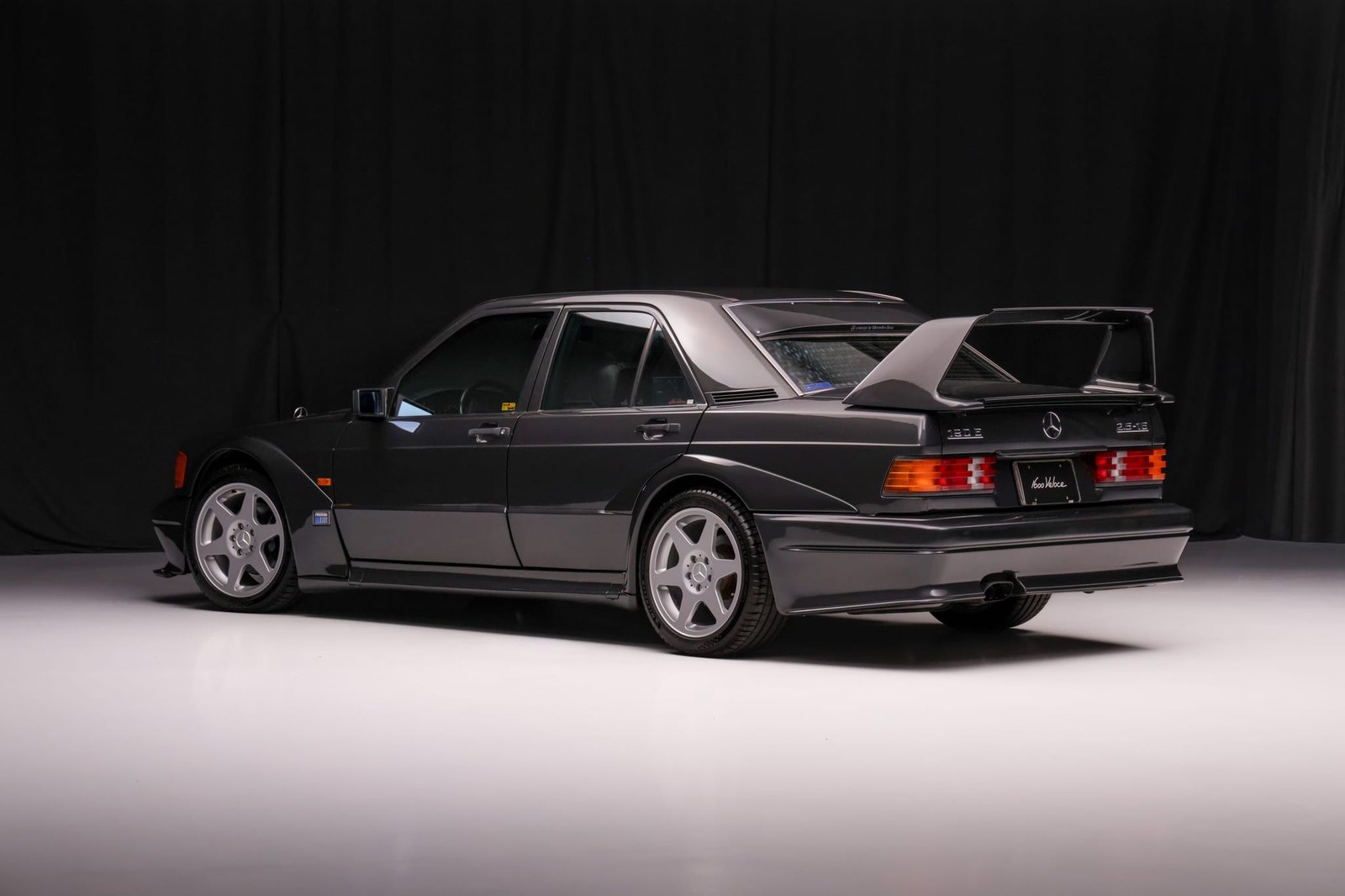
Market Find: A 190E Evolution II That Spent 36 Years in Japan — #448 of the 502 Mercedes Had to Build
Mercedes built exactly enough Evolution IIs to go touring car racing, and this one was delivered new in Japan and stayed there until it was exported this year. Bidding on Bring a Trailer sat at $201,000 with a week left to run.
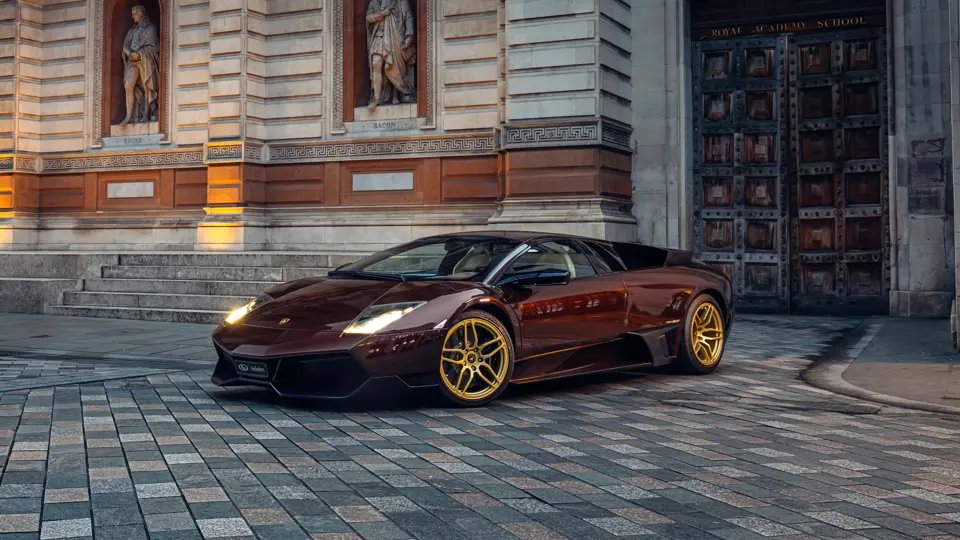
Market Find: The Last Manual V12 Lamborghini Heads to Sealed Bidding
A one-off, gated-manual Murciélago LP 670-4 SV finished in a color no other example wears is up for sealed bidding at RM Sotheby's, with the closest thing to a factory guarantee that no more like it are coming.
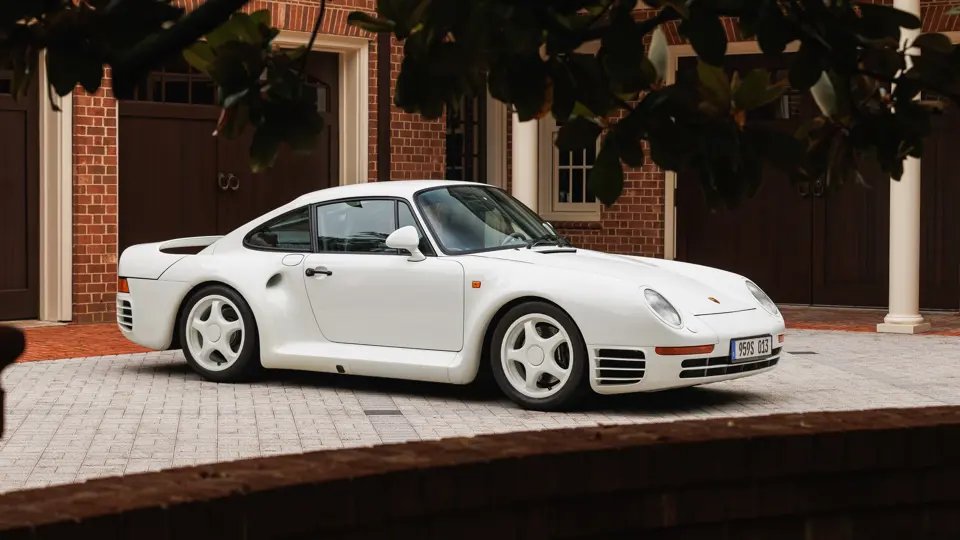
Market Find: Nick Heidfeld's Ultra-Rare Porsche 959 Sport Heads to Monterey
One of just 29 959 Sport examples built, and one of only two finished with factory air conditioning, this Grand Prix White coupe carries a $5 million to $6 million estimate at RM Sotheby's Monterey sale.