
Dodge Built a Motorcycle With a Viper V10. It Was Never Legal to Ride on a Public Road.
The Tomahawk had four wheels arranged like a motorcycle's two, an 8.3-liter 500-horsepower engine, and a theoretical top speed nobody ever tested. Dodge sold reproductions anyway — for $555,000 each.
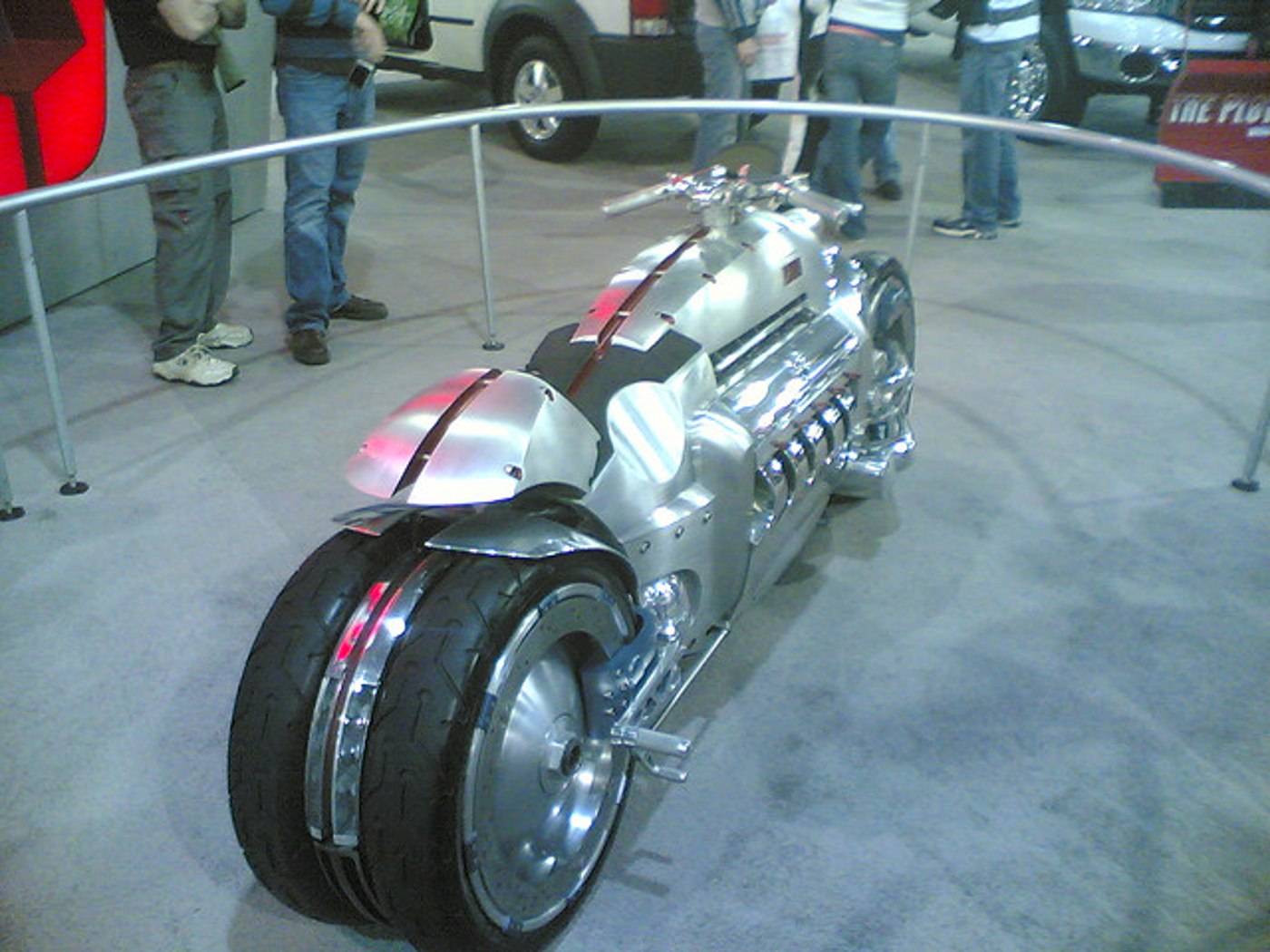
The Dodge Tomahawk debuted at the 2003 North American International Auto Show as a design-team exercise that got taken further than anyone expected. Its central mechanical fact is simple to state and hard to process: it runs the full 8.3-liter, 500-horsepower V10 out of a Dodge Viper SRT-10, producing 525 lb-ft of torque, mounted into something shaped roughly like a motorcycle.
Fitting that engine into a two-wheeled package wasn't realistic, so the design team gave it four wheels instead — arranged in close-set pairs front and rear, reportedly inspired by the light cycles from Tron, using a hub-center steering setup that lets both wheel pairs articulate together rather than relying on a conventional fork. US regulators define a motorcycle partly by having no more than three wheels touching the ground during normal operation, which meant the Tomahawk's four-wheel layout put it outside any path to street legality before a single test ride ever happened.
The performance claims that came with it were aggressive enough to draw skepticism from Dodge's own team. In theory, 0-60 in 2.5 seconds and a genuinely absurd 300 mph top speed were floated publicly — but the Tomahawk's own senior designer publicly doubted a widely repeated 400 mph figure, noting the bike was geared for acceleration, not top speed, and that something closer to 250 mph was the realistic ceiling if it were ever actually run flat out, which it wasn't.
None of that stopped DaimlerChrysler from finding a way to sell it anyway. Later in 2004, the company commissioned a run of hand-built reproductions and listed them in the Neiman Marcus Christmas catalog at $555,000 each, marketed less as a functional vehicle than as what the company itself called 'a sleek rolling sculpture.' It's one of the purest examples in automotive history of an engineering department building something because the engine existed and the shape looked right, with street legality never actually part of the plan.
Ford Ran the Timing Belt Through the Oil. Federal Investigators Say the Belt Is Now Starving the Engine.
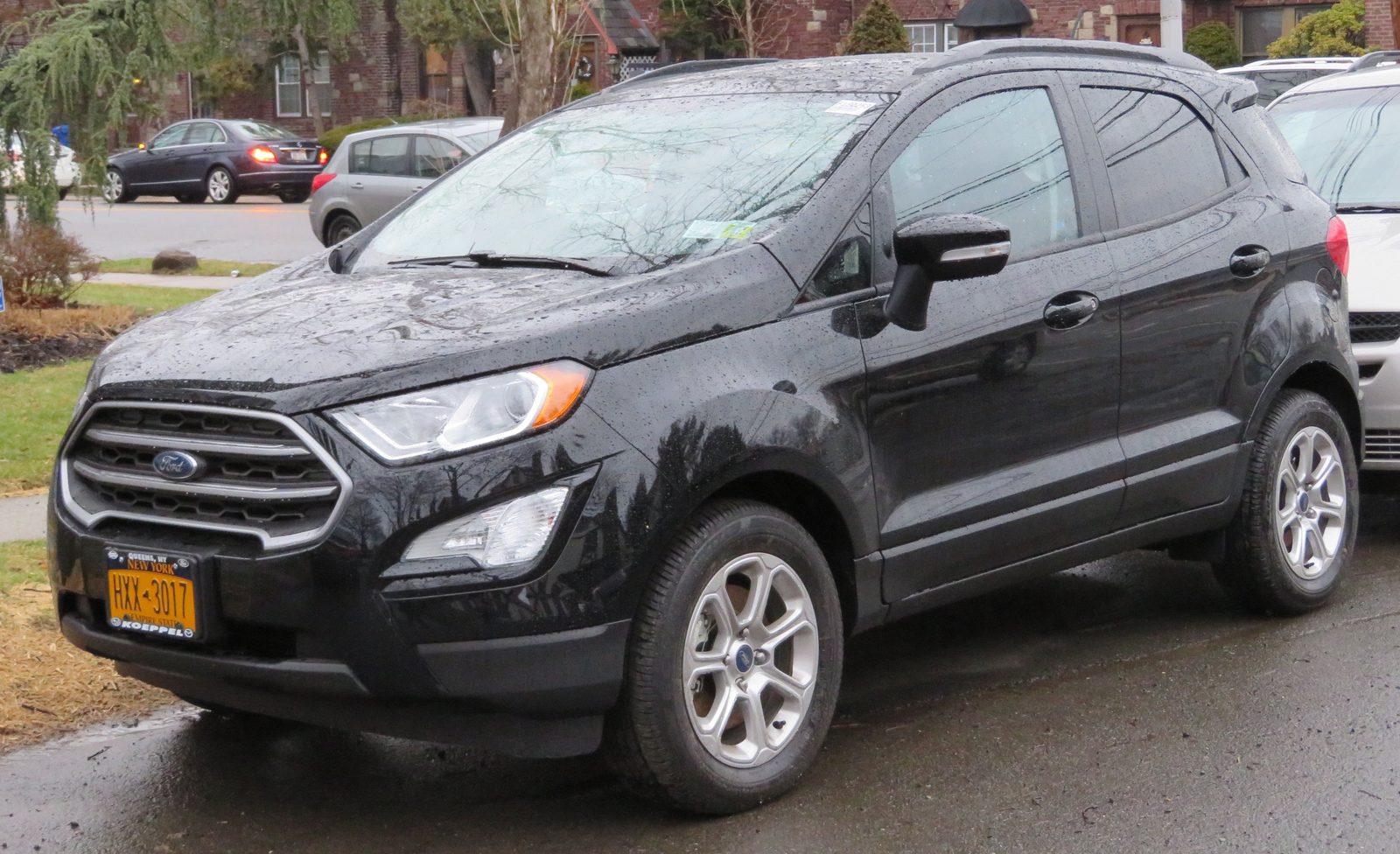
A belt-in-oil drive is quieter and lower-friction than a chain. NHTSA's new engineering analysis says the 1.0-liter EcoBoost's belt sheds material that clogs the oil pump pickup — and that screen can't be cleaned without pulling the engine.
The Automatic's Oldest Trick: How a Torque Converter Multiplies Torque With No Gears
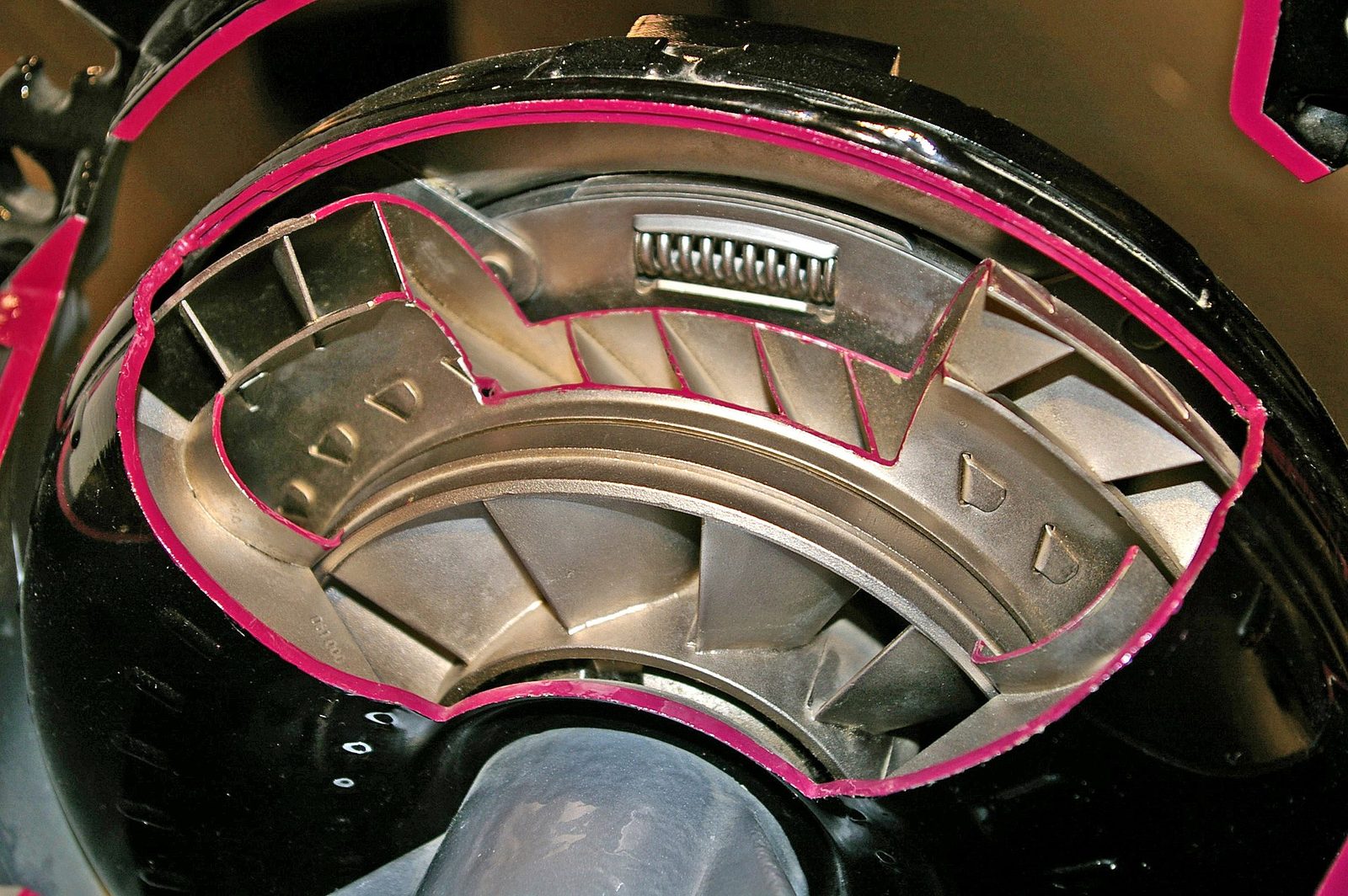
It has no gear teeth and nothing that meshes, yet a torque converter can roughly double engine torque off the line. The part doing the work is the one bolted to nothing at all.
How Electronic Stability Control Reads a Slide and Corrects It Before the Driver Even Feels It
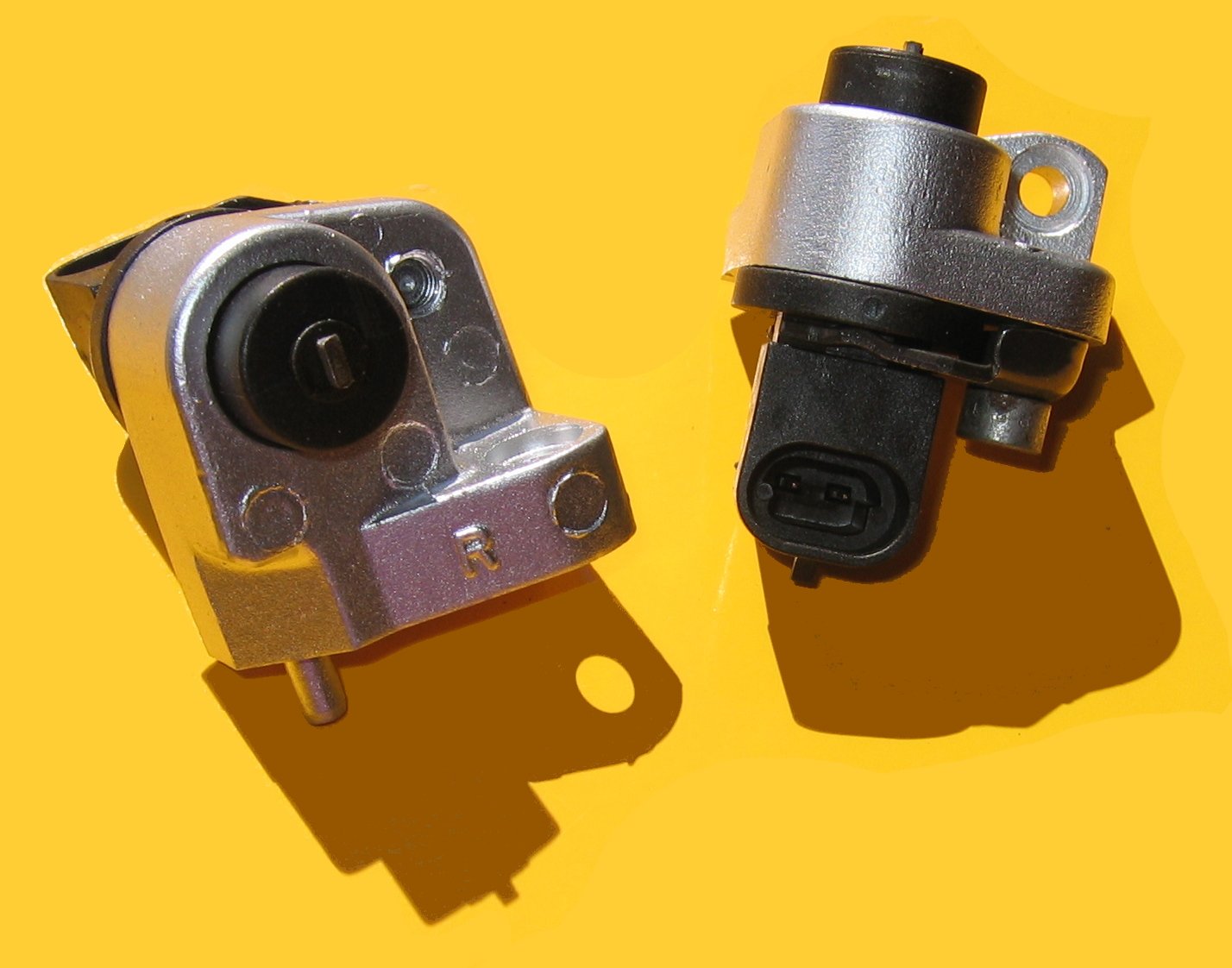
A network of wheel-speed, steering-angle, and yaw sensors checks the car's actual path against the driver's intended one many times a second — and brakes a single wheel to pull it back if the two disagree.